

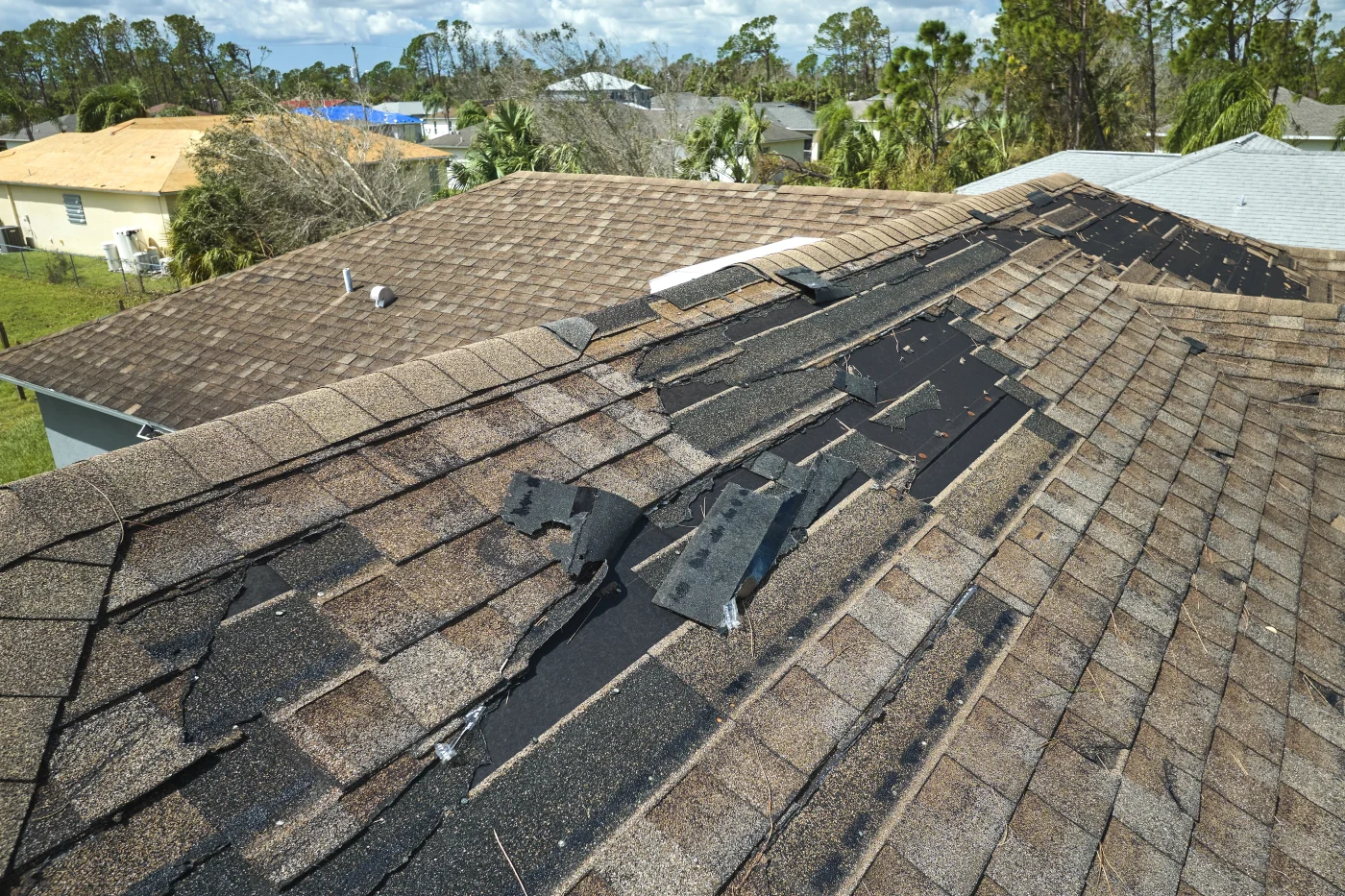
Roof repair in Greenwich, CT often starts with damage you can’t see.Lifted shingles, bent flashing, and granule loss are the top warning signs.At Sound Renovation, we use drone imagery to catch damage early.Acting fast keeps roof repair costs from climbing after the next rain.
Gauging Residential Roof Repair In Greenwich, CT After A Storm
What A Storm Actually Does To A Residential Roof
Residential roof repair in Greenwich, CT becomes necessary far more often than homeowners expect after a single storm. A gust that barely rattles the windows can still lift shingle edges, separate flashing from chimney brick, or knock gutter sections loose.
The damage rarely shows up as a ceiling drip on day one. Water finds its way through a lifted shingle tab, travels along the roof deck, and appears inside the house weeks later. By then, the entry point can be three feet from the wet spot on your ceiling.
This is why a post-storm inspection matters even when the roof looks fine from your driveway.
Shingle Roof Repair Warning Signs In Greenwich, CT
Shingles are your first line of defense, and they show damage in specific ways. Examples include:
- Granule loss:Asphalt shingles are coated with small granules that block UV and shed water. After a storm, check your gutters. A heavy deposit of gritty, sand-like material means shingles are shedding their protective layer.
- Missing shingles: A full tab gone means the roof deck below is exposed. Any rain that follows goes straight in.
- Lifted or curled tabs: Wind gets under the tab edge and breaks the seal strip. The shingle stays in place but no longer lies flat, letting water underneath.
- Cracked or split surface: Hail hits shingles hard enough to crack them without knocking them free. The crack is often a hairline you can only see up close.
Each of these signs points toward a roof repair need that worsens with the next storm event. Holding off repairs or choosing quick, short-term options may save you money now, but that won’t stay true in the future.
Flashing And Chimney Roof Repair In Greenwich, CT
Flashing is the thin metal that seals the joints where your roof meets a vertical surface: chimneys, skylights, dormers, and walls. It is one of the first places to fail in a storm.
Wind and hail bend flashing, crack the sealant around it, or pull it away from the surface it was sealed to. Once the seal breaks, water runs straight down the joint and into the wall cavity below.
Chimney flashing is especially vulnerable. Roof repair contractors in Fairfield County, CT see more flashing failures at chimneys than anywhere else on the slope. The chimney sits high and catches the full wind load from every direction.
If your chimney uses brick mortar that was already softening before the storm, a hard wind event can crack that mortar further. That opens up a separate water entry point at the top of the chimney, not just the base.
Our Drone Evaluation For Roof Repair In Greenwich, CT
Most residential roof repair contractors walk a roof and look for obvious problems. We start every evaluation differently. We fly a drone over the property to capture detailed imagery before anyone sets foot on the slope.
That aerial pass shows us things a ladder inspection misses: the full ridge line and every valley where two planes meet. It also covers areas behind dormers and sections near the chimney that are awkward to safely reach.
Drone imagery creates a visual record you can hand directly to your insurer. Labeled photos of every problem area speed up the claims conversation far more than a verbal description of what we found on the slope.
After the aerial review, we come on-site to confirm findings and write a scope. Nothing gets estimated from the street.
Roof Repair Cost Factors After Storm Damage
Roof repair cost depends on what the storm actually broke, not just how bad the storm looked on the weather map.
A few lifted shingles with an intact deck below cost far less to fix than water that has sat long enough to soften the wood beneath. Timing is the biggest variable in the final number.
Flashing repairs are generally straightforward when caught early. If the flashing failure allowed water into the wall or ceiling, the scope expands. Every week a roof leak stays open, the cost to repair the roof damage grows.
We don’t position ourselves as the fastest or cheapest option. What we offer is work done right the first time, using long-lasting materials from brands like GAF. Every step is handled the Sound Way, and nothing gets handed off to a crew you’ve never met.
Schedule Your Greenwich, CT Roof Repair Inspection With Sound Renovation
Last week’s storm may have left residential roof repair needs in Greenwich, CT that your roof won’t reveal until the next hard rain. We document every lifted shingle, cracked surface, and flashing gap before writing your repair scope.
Schedule a free roof inspection with Sound Renovation today. We’ll give you a clear written scope and drone imagery that you can share with your insurer. We answer every call and every email, and owners Adam and Paul work every job directly.
After a storm, homeowners have real questions about what to do next. Here are direct answers based on what we see in the field across Greenwich, CT roof repair jobs.
We provide that documentation as part of every residential roof repair evaluation we complete. We also answer any and all roof repair questions you may have, like what to expect during the process.
Common Questions About Residential Roof Repair In Greenwich CT
How do I know if my storm damage qualifies for a roof repair insurance claim?
A: Most homeowner policies cover roof damage from wind, hail, or falling debris. A documented inspection with labeled photos gives your adjuster what they need.
We provide that documentation as part of every residential roof repair evaluation we complete. We also answer any and all roof repair questions you may have, like what to expect during the process.
How does flashing failure lead to a roof repair need in Greenwich, CT?
A: Flashing seals the joints between your roof and vertical surfaces like chimneys and dormers. Wind or hail can bend or unseat it, opening a gap that allows water through immediately. Catching a flashing failure early keeps the repair scope tight and the cost low.
How soon after a storm should I schedule a roof repair inspection?
A: Get a roof repair inspection within two weeks of a major storm. Shingle damage left open through the next heavy rain can reach the deck and expand the repair scope significantly.